

Safe Transportation Options After Hospital Discharge
%20copy.png/v1/fill/w_320,h_320/file.jpg)

Introduction: Hospital Discharge Is Not the End of Care
Leaving the hospital is often seen as the final step in treatment—but in reality, it is one of the most vulnerable moments in a patient’s recovery. After surgery, illness, or emergency care, patients are frequently discharged while still experiencing pain, fatigue, limited mobility, or medication side effects.
Safe transportation after hospital discharge is not a convenience. It is a critical part of the recovery process. Without proper planning, patients risk falls, complications, missed follow-up care, or even readmission.
In Grand Rapids and across West Michigan, professional non-emergency medical transportation plays a vital role in helping patients transition safely from hospital to home, rehab facility, or follow-up appointment.
Why Post-Discharge Transportation Requires Special Care
Patients leaving the hospital are often not physically or mentally ready to travel like a typical passenger. Common post-discharge conditions include:
Limited mobility or inability to walk unassisted
Use of wheelchairs, walkers, or crutches
Drowsiness from anesthesia or pain medication
Dizziness, nausea, or weakness
Surgical wounds or medical devices
Cognitive confusion, especially among seniors
Standard transportation options are rarely equipped to handle these risks safely.
The Risks of Improper Transportation After Discharge
When patients are discharged without appropriate transportation, serious issues can occur:
Falls while entering or exiting vehicles
Strain or injury from unsafe transfers
Delayed recovery due to stress or overexertion
Missed discharge instructions or medications
Increased likelihood of hospital readmission
Healthcare providers consistently identify transportation as a key factor in preventable readmissions, especially within the first 7–14 days after discharge.
Who Needs Professional Post-Discharge Transportation?
Medical transportation after hospital discharge is especially important for patients who:
Have undergone surgery (orthopedic, abdominal, cardiac, etc.)
Are recovering from stroke or neurological events
Are being discharged to rehab or skilled nursing facilities
Use wheelchairs or mobility aids
Are seniors living alone
Have cognitive impairments or memory challenges
Are taking medications that impair alertness
Even patients who appear stable may require professional assistance during transport.
Types of Transportation After Hospital Discharge
Understanding the appropriate level of transportation is essential.
Ambulatory Medical Transportation
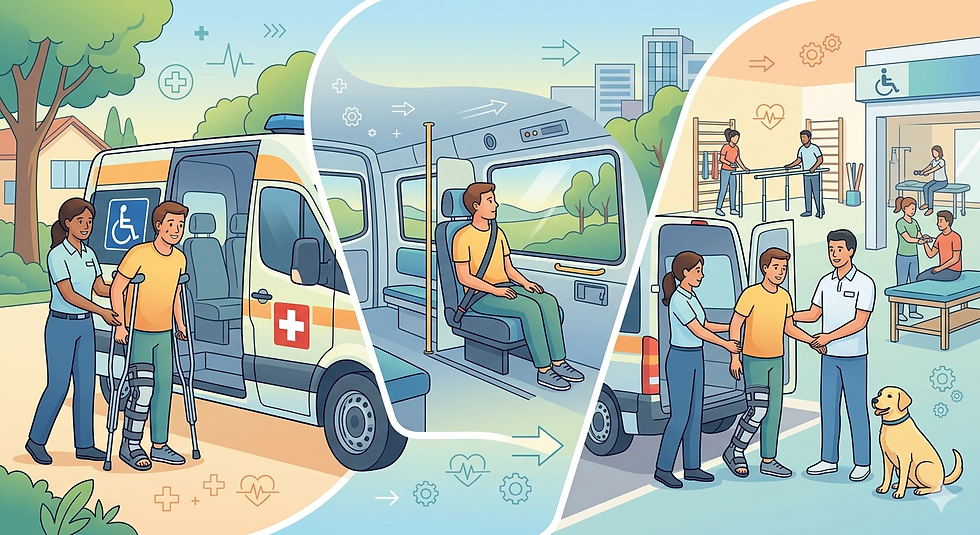
For patients who can walk with assistance but should not drive. Drivers provide door-to-door support and help navigate steps, curbs, and entrances.
Wheelchair Transportation
For patients who cannot walk safely or are advised not to bear weight. Vehicles include ramps or lifts and securement systems to stabilize the wheelchair during transit.
Stretcher Transportation
For patients who must remain lying down due to medical condition or physician instruction. This option is typically coordinated with discharge planners.
Selecting the correct option ensures safety and compliance with discharge recommendations.
Coordination With Hospital Discharge Planners
Hospitals often involve case managers or discharge planners to coordinate next steps. Transportation is a key part of this process.
Professional medical transportation providers work with discharge teams to:
Confirm discharge timing
Match the correct transport type
Ensure accessibility at the destination
Coordinate safe handoff at arrival
Advance planning avoids delays and last-minute complications on discharge day.
Real-World Scenario: Avoiding Readmission After Surgery
A Grand Rapids patient was discharged after knee replacement surgery and initially planned to use a family member’s vehicle. However, transferring into the car proved unsafe due to pain and limited mobility.
A wheelchair-accessible medical transport was arranged instead. The patient arrived home safely, avoided reinjury, and attended all follow-up physical therapy appointments—reducing the risk of readmission.
Transportation to Rehab and Skilled Nursing Facilities
Many patients are discharged not to home, but to:
Inpatient rehabilitation centers
Skilled nursing facilities
Long-term care facilities
These transitions often require:
Coordination between facilities
Proper mobility equipment
Trained drivers familiar with medical environments
Professional medical transportation ensures continuity of care during these transitions.
The Importance of Door-to-Door Assistance
Post-discharge patients often need more than curbside service. Door-to-door assistance includes:
Help exiting the hospital safely
Escorting the patient to the vehicle
Assistance entering the destination facility or home
Ensuring the patient is settled safely
This level of support reduces injury risk and anxiety for both patients and caregivers.
Medication and Recovery Considerations During Transport
Patients are frequently discharged with new medications that may cause:
Drowsiness
Confusion
Nausea
Reduced coordination
Medical transportation drivers are trained to recognize these challenges and provide calm, patient-focused assistance during transit.
Planning Transportation Before Discharge Day
The safest discharges are planned in advance. Caregivers and patients should:
Ask about transportation needs early
Confirm discharge date and time
Verify mobility restrictions
Schedule transportation at least 24 hours in advance
Ensure destination accessibility
Early planning prevents rushed decisions and unsafe alternatives.
Insurance and Payment Considerations
Medicaid
Some Medicaid plans may cover transportation after hospital discharge when medically necessary and properly authorized.
Medicare
Original Medicare generally does not cover routine discharge transportation unless it meets strict medical criteria.
Private Pay
Many patients use private-pay medical transportation to ensure timely discharge and safe travel, especially when insurance coverage is limited.
Understanding options in advance avoids delays on discharge day.
How Transportation Supports Recovery Outcomes
Safe post-discharge transportation directly contributes to:
Reduced hospital readmissions
Better medication adherence
Timely follow-up appointments
Improved patient confidence
Lower caregiver stress
Transportation is not separate from recovery—it supports it.
Common Mistakes After Hospital Discharge
Patients and caregivers often make these mistakes:
Assuming a standard car is sufficient
Underestimating mobility limitations
Waiting until discharge day to arrange transport
Choosing convenience over safety
Not coordinating return follow-up transportation
Avoiding these errors leads to safer outcomes.
Frequently Asked Questions
Can transportation be arranged directly from the hospital?
Yes. Medical transportation can pick up patients directly from hospitals, rehab centers, or surgical facilities.
What if discharge time changes?
Professional providers can often adjust pickup times with proper communication.
Can a caregiver ride along?
In most cases, one caregiver or family member may accompany the patient.
Is this service only for seniors?
No. Patients of all ages may require post-discharge transportation.
Do drivers help patients into their homes?
Yes. Door-to-door assistance is standard for medical transportation services.
Supporting Caregivers During Discharge
Hospital discharge can be overwhelming for caregivers. Professional transportation:
Reduces logistical stress
Ensures safety during transitions
Allows caregivers to focus on recovery support rather than driving challenges
Using the right transportation is an act of care, not a loss of independence.
Final Thoughts: A Safe Ride Is Part of Healing
Hospital discharge is not the finish line—it’s the beginning of recovery. Safe, professional transportation ensures patients arrive at their next destination with dignity, comfort, and reduced risk.
In Grand Rapids and throughout West Michigan, medical transportation bridges the gap between hospital care and successful recovery. When transportation is handled correctly, patients heal better, caregivers worry less, and outcomes improve.


Comments